
Compare Performance
Goal
Understand how Graftcode's Hypertube technology delivers superior performance compared to traditional REST APIs and gRPC, reducing cloud costs, CO2 emissions, and improving user experience.
What You'll See
- How Graftcode reduces code processing overhead for every remote call
- Performance comparison between Graftcode, REST, and gRPC protocols
- Real-world benchmarks showing measurable speed improvements
- Environmental and cost benefits of optimized communication
The Technology: Hypertube Channel
Instead of using REST or HTTP-based gRPC, Graftcode uses our proprietary Hypertube channel technology:
Performance Benefits
Faster Processing
- Reduced client-side processing
- Faster server-side execution
- Lower latency
Cost Reduction
- Lower cloud costs: Reduced CPU usage on both client and server
- Fewer server resources: More efficient use of compute power
- Reduced bandwidth: Optimized binary throughput usage
Environmental Impact
- Lower CO2 emissions: Reduced energy consumption from optimized processing
- Greener computing: More efficient resource utilization
- Sustainable architecture: Performance gains compound across millions of calls
Step 1. Try performance testing tool
Experience the performance difference yourself with our interactive benchmarking tool:
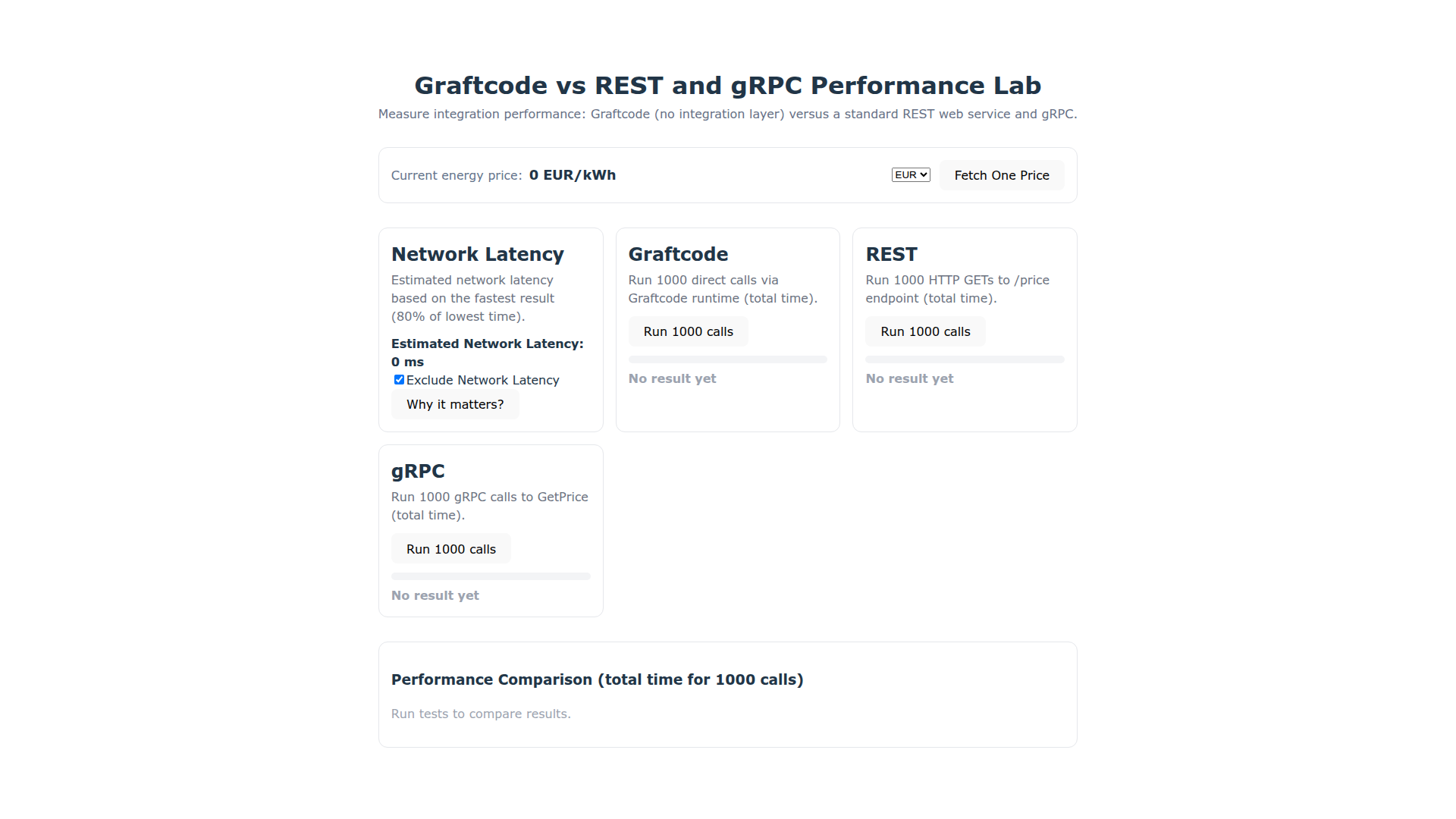
The tool allows you to:
- Run 1000 calls using Graftcode, REST, and gRPC protocols
- Compare with REST HTTP GET requests to /price endpoint
- Compare with gRPC calls to GetPrice protobuf method
- Measure network latency to isolate pure protocol performance
- See real-time results with total execution time for each method
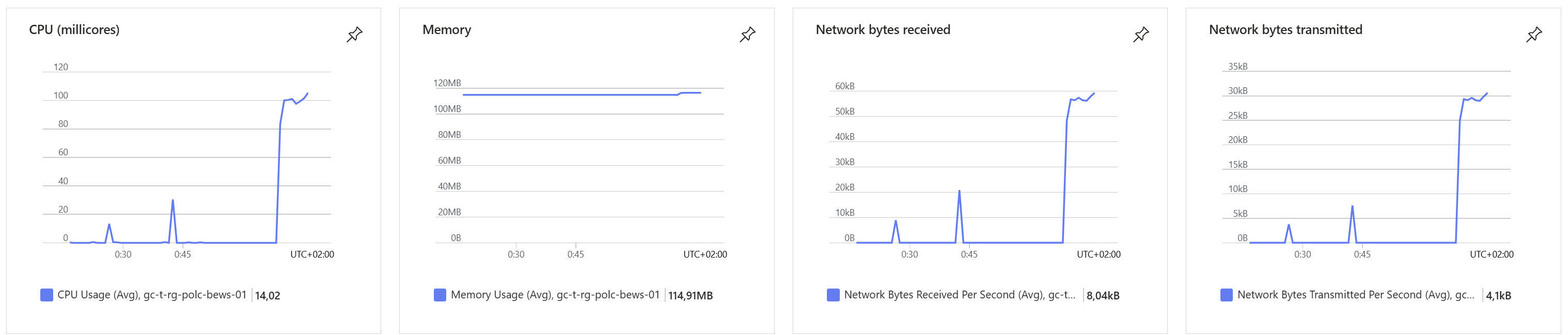
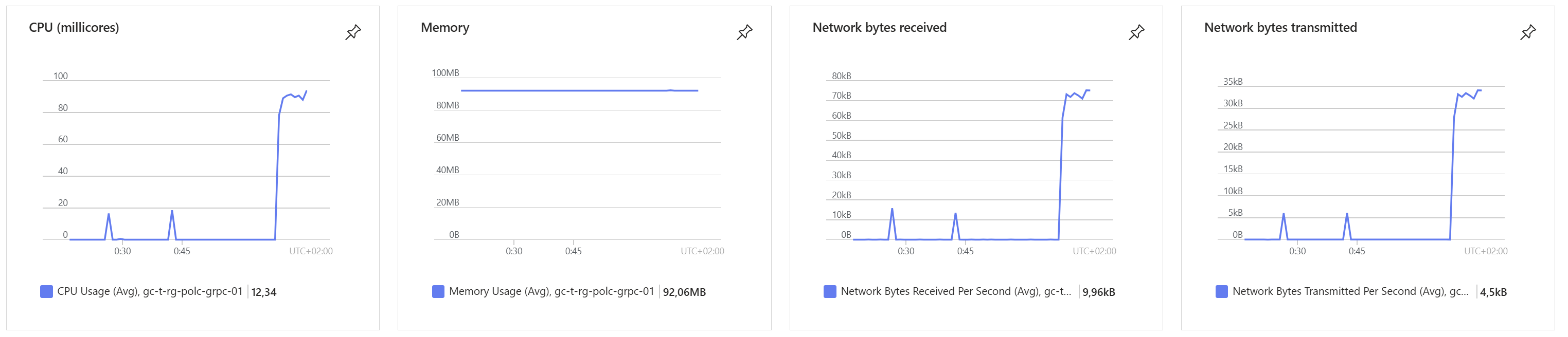
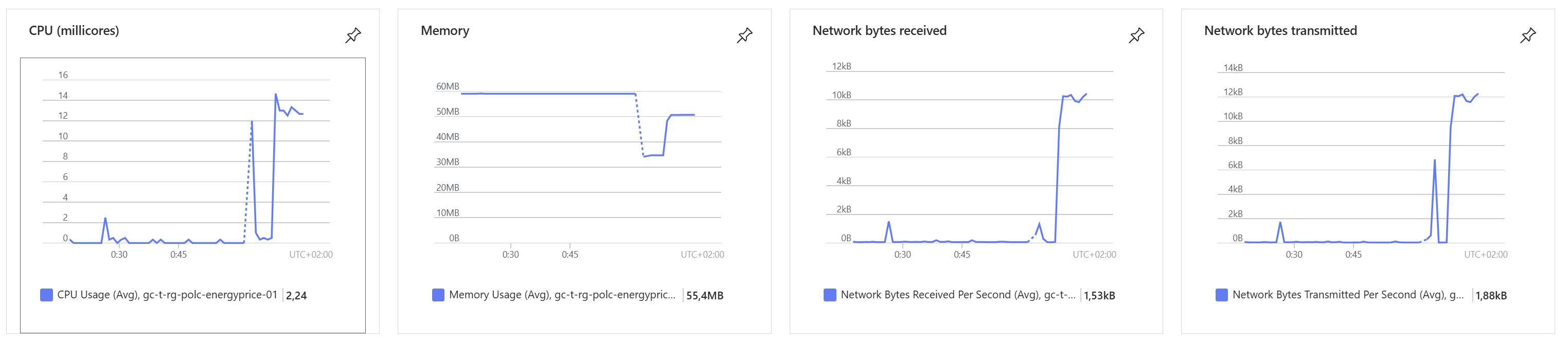
When running a continuous stream of requests against the same operation hosted by Graftcode vs gRPC or REST, we see that Graftcode's range of Y axis is multi-fold lower than REST and gRPC:
REST Performance
gRPC Performance
GRAFTCODE Performance
Step 2. Run the performance tests
- Open the Performance Lab using the link above
- Click "Run 1000 calls" for each protocol (Graftcode, REST, gRPC)
- Compare the results in the "Performance Comparison" section
- Note the time differences and calculate the performance improvement
- Check the Developer tools to see the difference in the way communication is handled
Step 3. Calculate your savings
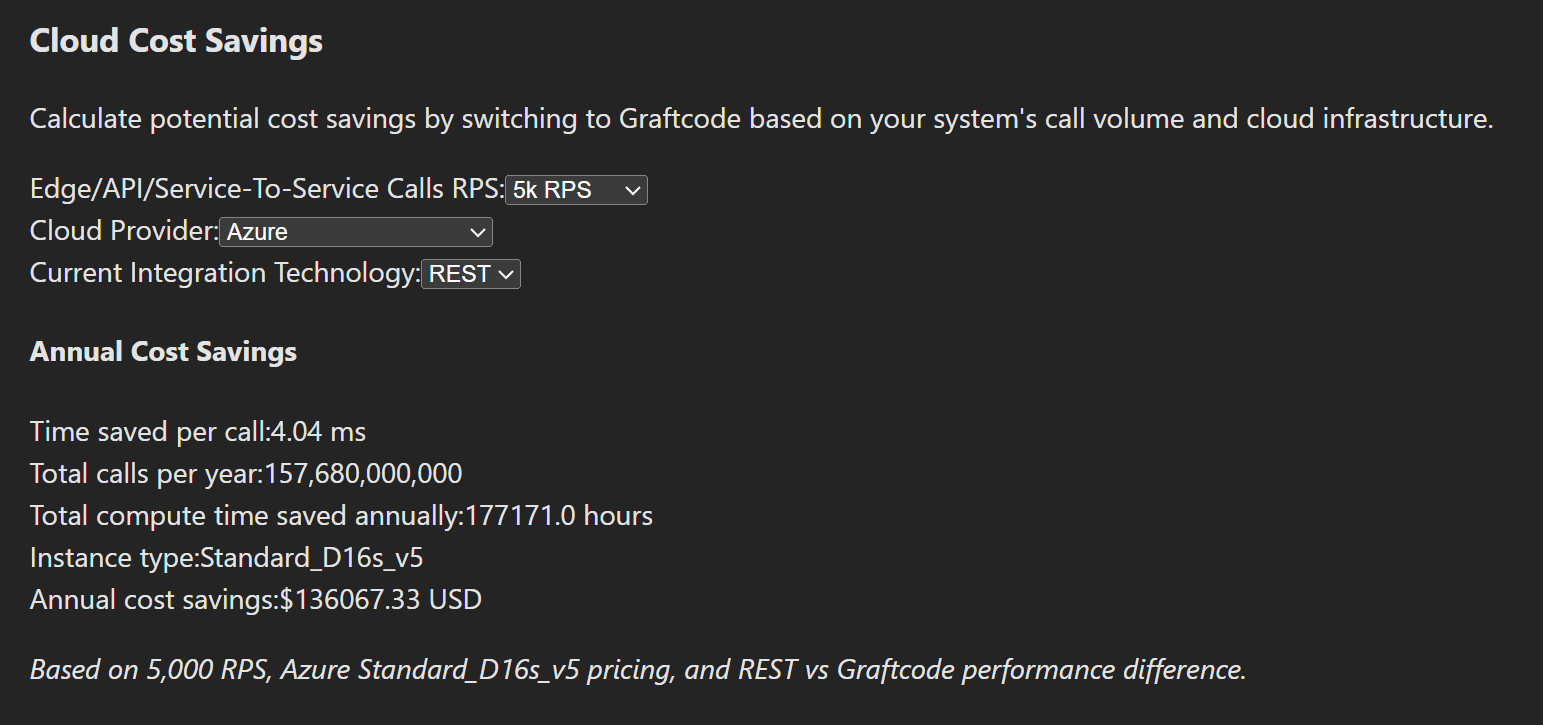
Use the Cloud Cost Savings calculator in the Performance Lab to estimate your potential cost reductions:
How to Use the Calculator
- Select your current call volume from the RPS dropdown (requests per second)
- Choose your cloud provider (Azure, AWS, Google Cloud)
- Pick your current integration technology (REST, gRPC, GraphQL)
- Review the calculated annual savings based on performance improvements
What the Results Show
- Time saved per individual call compared to traditional approaches
- Total compute time saved annually across all your API calls
- Recommended cloud instance type based on your usage patterns
- Annual cost savings in USD based on current cloud pricing
Example Results
- At 5,000 RPS with Azure Standard_D16s_v5 instances
- Graftcode saves 4.04ms per call compared to REST
- Annual savings of $136,067 from reduced compute time
- Based on real performance differences measured by the lab
Note
The calculator uses actual performance benchmarks and current cloud provider pricing to give you realistic cost projections for switching to Graftcode.
Why Performance Matters
- User Experience: Faster apps lead to higher user satisfaction and retention
- Scalability: Better performance means your app can handle more users
- Sustainability: Reduced resource usage contributes to environmental goals
- Business Value: Performance improvements directly impact your bottom line